For wig manufacturers and extension brands, the difference between genuine raw Indian temple hair and chemically processed alternatives can make or break product quality. Learn the definitive markers that distinguish authentic temple hair from imitations.
How to Identify Genuine Raw Indian Temple Hair vs Processed Hair
For wig manufacturers and extension brands sourcing from India, the quality of your raw material input directly determines the lifespan and customer satisfaction of your finished products. Yet the global raw hair market is rife with mislabeled, processed, or chemically treated hair sold as "raw" or "virgin."
This guide gives you the tools to distinguish genuine raw Indian temple hair from processed alternatives — knowledge that every procurement professional, brand owner, and quality manager should internalize before placing orders.
What Makes Indian Temple Hair "Genuine Raw"?
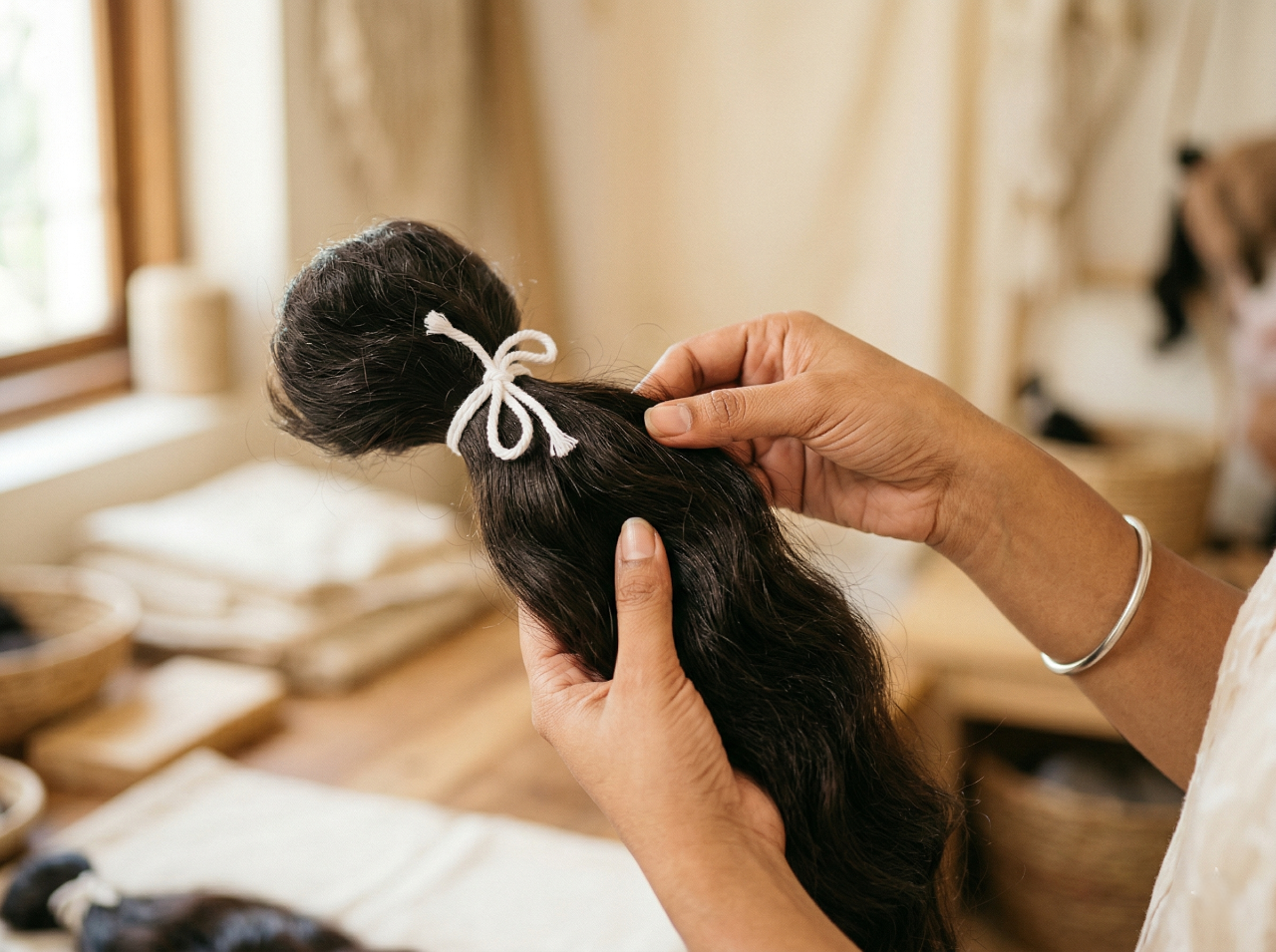
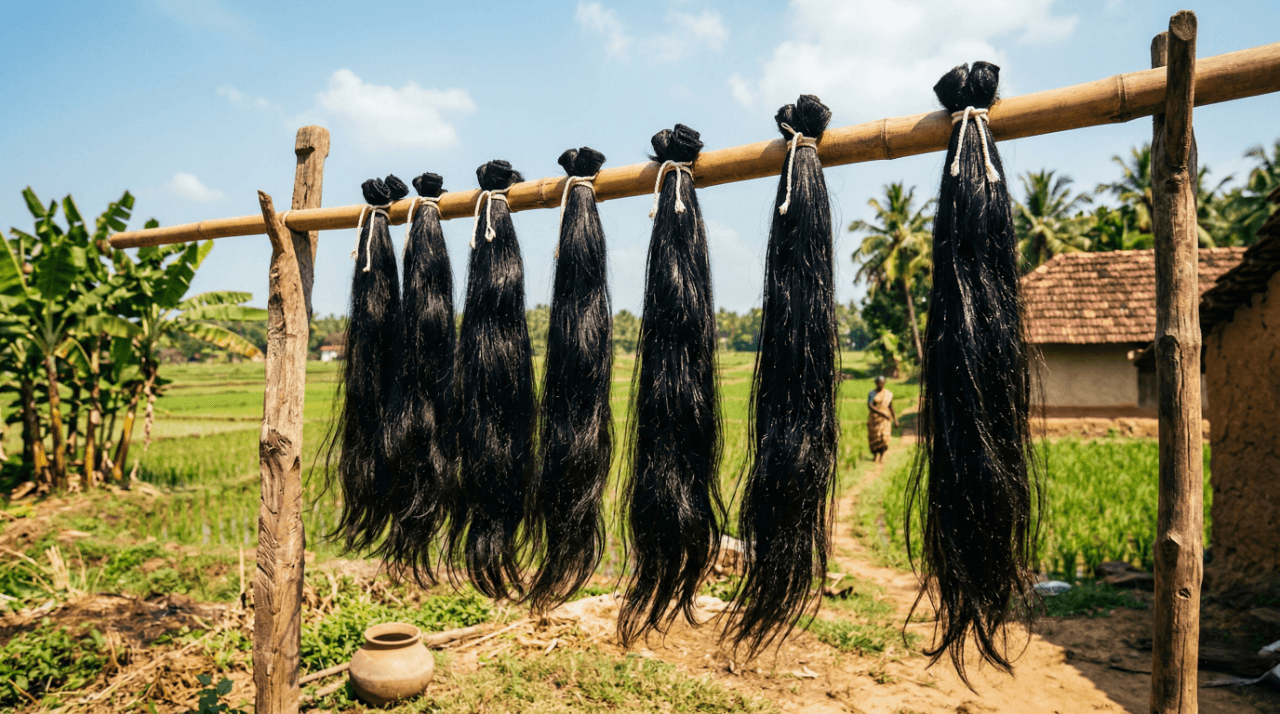
Authentic raw Indian temple hair originates from religious tonsure rituals at major South Indian temples, most notably the Tirumala Tirupati Devasthanams (TTD) in Andhra Pradesh. Devotees voluntarily shave their heads as an act of offering, and the collected hair is auctioned through a transparent bidding process to licensed exporters.
Key defining characteristics of genuine raw temple hair:
- ●Single-donor origin: Hair from one individual head, maintaining consistent texture and cuticle direction throughout the length.
- ●Zero chemical processing: No acid wash, no silicone coating, no dye, no bleach, and no steam treatment.
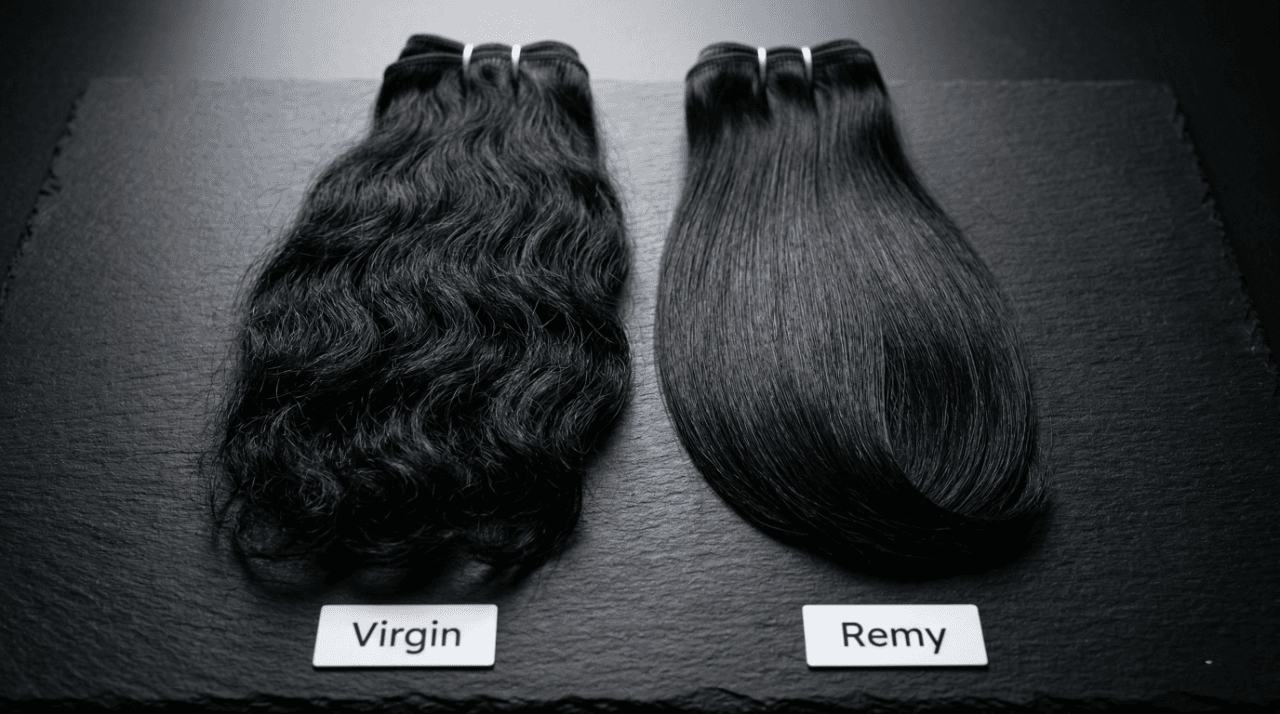
- ●Cuticle intact and aligned: All hair strands run root-to-tip in the same direction — the hallmark of Remy quality.
- ●Natural color variation: Slight variation between jet black and dark brown is normal and expected. Uniformly identical color across a large lot is a red flag for dye.
- ●Natural texture: Slight waviness or body is inherent to Indian hair — perfectly straight locks are often the result of steam or chemical straightening.
The Float Test: Your First Line of Defense
One of the simplest field tests for hair quality is the float test:
- 1.Take 5–10 strands from different parts of the bundle.
- 2.Place them in a glass of water.
- 3.Observe for 2–3 minutes.
Genuine raw hair: Will float initially due to natural oils, then gradually sink as it becomes saturated. This is normal and healthy.
Processed or coated hair: Often floats for an unusually long time due to silicone or synthetic coating that repels water. When silicone-coated hair gets wet, it feels unusually silky at first but becomes tangled and matted after the coating washes out.
The Burn Test: Identifying Synthetic Blends
A small burn test reveals whether the hair is 100% human:
- 1.Remove 10–15 strands from the bundle.
- 2.Hold them with tweezers and bring a lighter close.
- 3.Observe the burn behavior and smell.
Genuine human hair: Burns slowly, curls away from the flame, forms a crushable black ash, and smells like burnt protein (similar to burnt fingernails).
Synthetic blends: Burns quickly, drips or melts, forms hard beads, and smells like burnt plastic.
Visual and Tactile Inspection at Scale
When evaluating bulk orders:
Color consistency: Natural raw hair from a single temple lot will have very slight tonal variation. Unnatural uniformity — every bundle an identical jet black — suggests acid washing or black dye application, which strips cuticle integrity over time.
Cuticle alignment check: Run your fingers from tip to root along a bundle. Genuine Remy hair will feel slightly rough in the tip-to-root direction (like stroking a cat's fur backward) due to cuticle scales facing outward. Processed or stripped hair feels uniformly smooth in both directions because the cuticles have been removed.
Shedding test: Gently tug a small section of hair from the bundle. Minimal shedding is normal; excessive shedding of short strands indicates non-Remy mixing or poor wefting.
Bundle weight consistency: Weigh 5 random bundles from a lot on a postal scale. Genuine quality-controlled bundles should not deviate more than ±5g from the stated weight. Significant variation indicates inconsistent sourcing or mixing of grades.
Documentation Red Flags
Beyond physical testing, documentation provides export provenance signals:
- ●HS Code accuracy: Genuine unprocessed temple hair should be exported under HS 05010010. If a supplier is using 05010020 (worked/processed hair) for what they claim is raw hair, clarify the discrepancy.
- ●FOB value: Under DGFT export policy, raw human hair exports require a minimum FOB of USD 65/kg. Suspiciously low FOB prices on supposedly raw hair may indicate misclassification or adulterated product.
- ●Certificate of Origin: Should clearly state India as the country of origin with the exporter's IEC number.
Working with a Compliant Supplier
At DEY GLOBAL EXPORTERS, every bulk temple hair shipment comes with:
- ●Batch QC report with moisture content, cuticle alignment percentage, and shedding rate documentation.
- ●Certificate of Origin from the Export Inspection Agency (EIA).
- ●Commercial invoice with accurate HS code classification and FOB pricing that meets DGFT requirements.
- ●WhatsApp-accessible QC photo documentation for each lot before dispatch.
Understanding what separates genuine raw temple hair from processed alternatives protects your brand, your product quality, and your customers. Demand documentation, conduct physical tests, and work only with exporters who are transparent about sourcing.
*Need to request a quality sample before your first bulk order? [Contact our export team](/contact) — we ship sample lots with full documentation.*
Need a Reliable Raw Hair Supplier?
Contact DEY GLOBAL EXPORTERS for pricing, sample requests, and export documentation.
Request a Price List