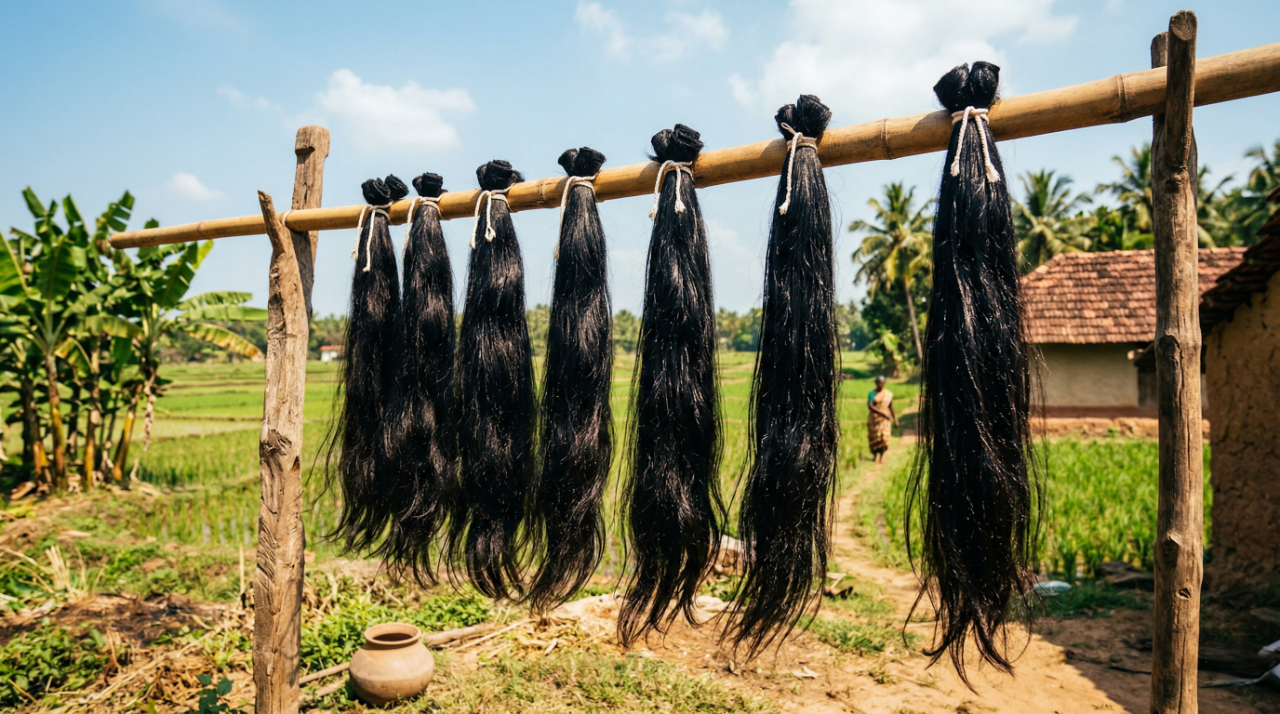
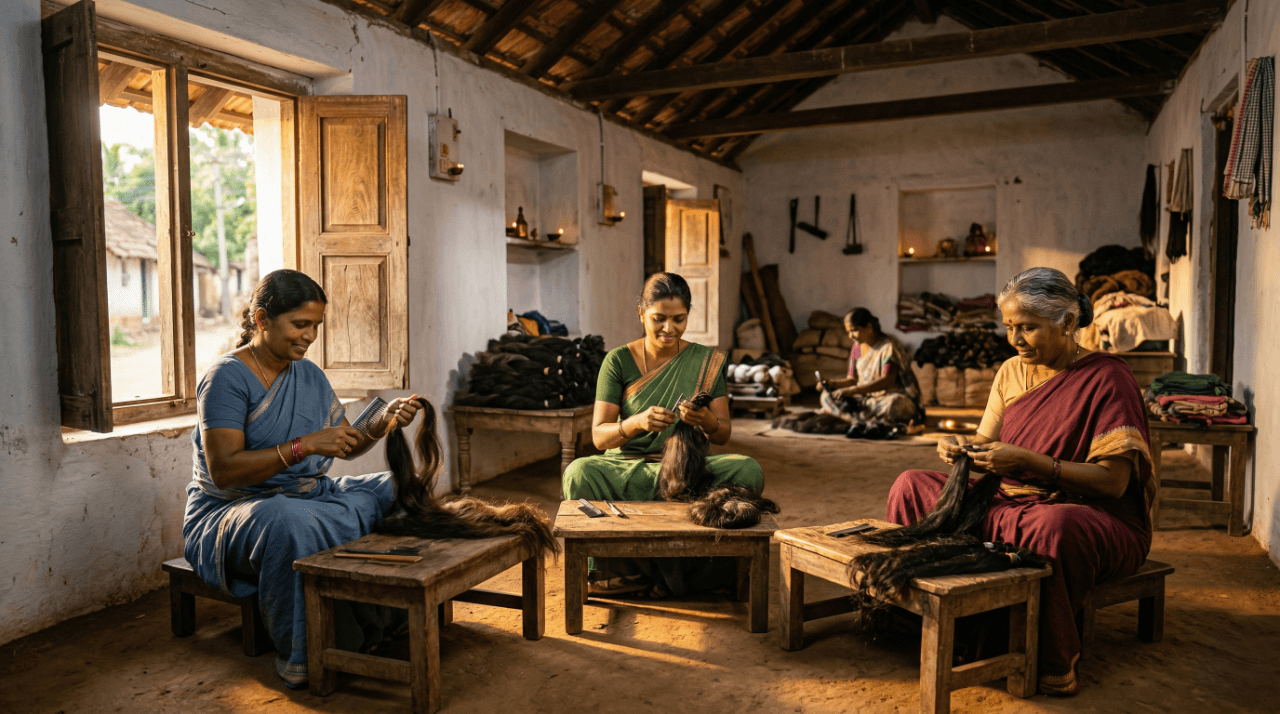
The story behind Indian temple hair — from the devotee's offering to your production line — is one of the most powerful brand narratives in the beauty industry. Here's the complete supply chain story that your customers will respect.
How Indian Temple Hair Is Collected and Why It Matters for Your Brand
The phrase "Indian temple hair" is ubiquitous in the global extensions market. But most international buyers — even experienced ones — have only a surface-level understanding of where this hair actually comes from, how it is collected, and why the collection method matters for product quality.
Understanding this story fully equips you to market your products with accuracy, build consumer trust, and justify your sourcing choices to ethically conscious customers.
The Religious Context: Tonsure as Devotional Offering
In Hindu tradition, tonsure (the ritual shaving of one's head) is a form of *mangalya* — an auspicious offering to a deity. The act is called *Mundan* in Sanskrit and represents the surrendering of vanity and ego.
The most significant tonsure site in the world is Sri Venkateswara Swamy Temple at Tirumala, Tirupati, in Andhra Pradesh. Over 50,000 devotees undergo tonsure at this single temple daily during peak seasons, making it the largest single source of quality human hair in the world.
Other major tonsure temples include:
- ●Tirupati (Andhra Pradesh)
- ●Palani Murugan Temple (Tamil Nadu)
- ●Sabarimala (Kerala)
- ●Shirdi Sai Baba Temple (Maharashtra)
The devotee's act is wholly voluntary and spiritually motivated. The hair is never purchased from devotees — it is offered freely as part of religious practice.
The Temple Auction System: Transparent and Regulated
Hair collected at major temples — particularly Tirupati — is not sold informally. It goes through a transparent institutional process:
- 1.Collection: Trained barbers, employed by the temple trust, conduct tonsures. Hair is gathered in designated collection areas, sorted by approximate length, and stored in climate-controlled facilities.
- 1.Lot Preparation: The temple trust (TTD at Tirupati) aggregates hair into auction lots by quality grade and weight.
- 1.Public E-Auction: TTD conducts public e-auctions, open to licensed Indian exporters. Bidding is competitive and transparent — documented online through the TTD portal.
- 1.Licensing: Successful bidders must hold a valid IEC (Import Export Code) and comply with all DGFT and customs regulations.
- 1.Dispatch: Hair is transported in sealed, documented lots from temple warehouses to the exporter's processing facility.
This institutional structure makes temple-sourced hair ethically superior to hair collected through informal channels, where exploitation of collectors is a documented industry concern.
The Salon and Collection Network: Supplementary Supply
Beyond temples, a second tier of the Indian hair supply ecosystem operates through:
- ●Salon collection: Hairdressers in cities collect cut hair from clients. Quality varies significantly — this hair is typically mixed from multiple donors and requires more intensive sorting.
- ●Household hair traders (peddlers): In rural and semi-urban areas, traveling hair traders exchange small amounts of hair for household goods. This is the oldest form of hair collection in India.
At DEY GLOBAL EXPORTERS, we prioritize temple-sourced hair for all bulk and premium product lines. Our salon-network hair is used only in our single-drawn wholesale bundles, and is clearly labeled as such.
Why This Matters for Your Brand
Ethical sourcing is a purchase driver: Consumers increasingly ask where product ingredients originate. "Temple-donated Indian hair" is one of the few raw materials in beauty with an inherently ethical and culturally meaningful narrative.
No exploitation: Temple hair is offered freely — there is no economic transaction with the donor. This is meaningfully different from hair collected through poverty-driven economic pressure.
Quality signal: Temple hair is typically longer (devotees grow hair over months or years before offering), single-donor, and from healthy heads — producing superior Remy quality.
Traceability: The institutional auction system means temple hair has a cleaner paper trail than informally collected hair. We can trace each lot to the temple auction invoice.
At DEY GLOBAL EXPORTERS, every temple hair shipment is accompanied by our batch documentation showing the source classification. We believe transparency in the supply chain is not just good ethics — it is good business.
*Interested in our temple hair products? [View our product catalog](/products) or [contact us](/contact) for pricing.*
Need a Reliable Raw Hair Supplier?
Contact DEY GLOBAL EXPORTERS for pricing, sample requests, and export documentation.
Request a Price List